
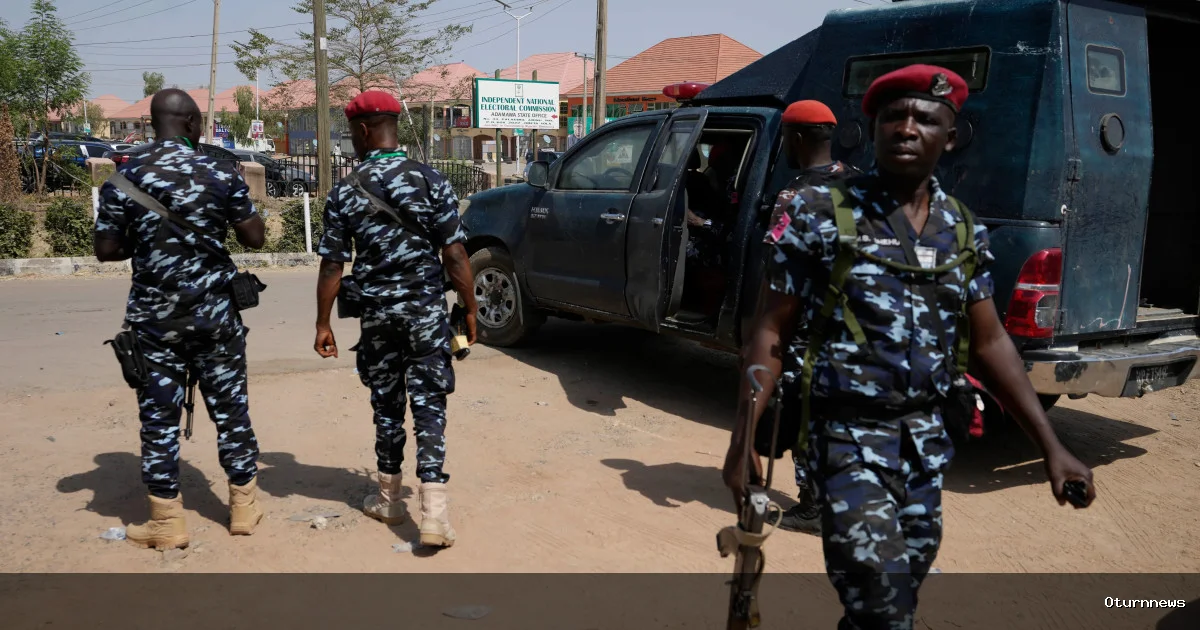
The Nigeria Police Force moved quickly on Tuesday after a video showing the public execution of a bound, begging suspect in Effurun, Delta State went viral. By the time most Nigerians had seen the footage, the announcement had already come: ASP Nuhu Usman, identified as the officer who discharged his weapon, had been arrested and transferred to Force Headquarters in Abuja under the directive of the Inspector-General of Police Tunji Disu.
For some Nigerians the speed of the response was a sign that the system was working. For others who have watched similar cases play out before, the speed of the arrest announcement was itself a source of concern, a familiar move in a familiar playbook where swift public action at the start is used to reduce pressure without necessarily producing the outcome that justice actually requires.
More in News
- White House Correspondents’ Dinner Shooting: Cole Tomas Allen Identified as Suspect
- Police Service Commission Recruitment 2026: Positions, Requirements and Application Process
- Environmental Sanitation in Lagos: Everything Residents Must Know Before Saturday Morning
- Nigerian Civil Service Recruitment 2026: Everything You Need to Know Before Applying
- Netanyahu’s Health Update 2026: The Truth About the Prostate Cancer Diagnosis
What the Police Said Happened
The official Nigeria Police Force statement described the incident as a violation of established regulations by ASP Usman. It said he had discharged his firearm in clear violation of extant regulations while his team was attempting to take the suspect Mene Ogidi into lawful custody following his apprehension at Benin Motor Park with a parcel allegedly containing a Beretta pistol and live ammunition.
The statement was carefully worded. It condemned the killing. It announced the arrest. It reiterated the force's zero-tolerance stance on extrajudicial actions. What it did not do was address every officer visible in the video. It did not explain the second shot. It did not address allegations that the scene may have been staged after the killing to present a different narrative. It did not say anything about the other members of ASP Usman's team who were present throughout the incident.
The Force Disciplinary Committee Is Not a Criminal Court
The police statement said ASP Usman would face the Force Disciplinary Committee for summary disciplinary measures and prosecution. Those are two different things presented in the same sentence in a way that blurs an important distinction. The Force Disciplinary Committee is an internal police body. It can result in dismissal, demotion, or other administrative penalties. It operates within the police institution, subject to the institutional culture of that institution.
Prosecution is a criminal matter for the courts. Amnesty International was explicit in its demand that Usman and all other officers involved face criminal prosecution, not just internal discipline. The organisation stated that the act amounts to culpable murder under Nigerian law, a serious criminal charge that carries a heavy penalty and that must be pursued through the normal court system rather than managed quietly within police ranks.
The critical question Nigerians are now asking is whether the police transfer to Abuja is a prelude to genuine criminal prosecution or whether the Force Disciplinary Committee process will absorb the case and produce a quiet outcome that removes the officer from service without ever establishing criminal accountability through the courts.
History Provides Context for the Concern
Nigeria has seen this pattern before. A video emerges. Public anger surges. An officer is arrested or identified. A statement is issued promising justice and accountability. Then the case enters a process that becomes progressively less transparent and the public follow-up fades as the next cycle of news takes over. The officer may be dismissed. The officer may be quietly reinstated. The family of the deceased may receive nothing. The criminal courts may never be involved at all.
The October 2020 EndSARS movement was a direct response to the accumulated weight of exactly this pattern repeated across years and across states. Panels were set up. Reports were produced. Some recommendations were implemented. The culture within certain police units did not change enough to prevent what happened to Mene Ogidi four years later in Effurun.
What Amnesty International and Advocates Are Demanding
Beyond the arrest of ASP Usman, Amnesty International demanded the identification and prosecution of every officer present at the scene during the killing, not just the one who pulled the trigger. The organisation asked the Inspector-General to treat this case as culpable murder and to ensure the matter reaches a court of competent jurisdiction rather than being processed entirely within internal police mechanisms.
Harrison Gwamnishu, the activist whose early sharing of the video helped drive national attention to the case, called for the complete accountability of all officers present and rejected the idea of an orderly room trial as an adequate response to what the video shows. Actor Stanley Ontop addressed the Delta State Commissioner of Police directly on social media, describing Delta State as a police abattoir and demanding that the officer and his full team face consequences proportionate to what they did.
The Test That Follows the Arrest
The arrest of ASP Nuhu Usman is the beginning of an accountability process. Whether it is the beginning of a genuine one or the beginning of a managed one will be determined in the weeks and months ahead. If criminal charges are filed, if the case is prosecuted openly in a court of law, if all officers present at the scene are investigated, and if Mene Ogidi's family is treated with dignity and informed fully of what happened, then something meaningful will have occurred. If none of those things happen, Nigeria will have added another name to the long list of those who begged for their lives in the presence of officers of the law and received nothing but a statement of condemnation that was forgotten before the next news cycle arrived.


Comments
Leave a Comment
All comments are reviewed before publishing.